Tagore Hills Ranchi Jharkhand: Nature, Poetry, and Scenic Beauty

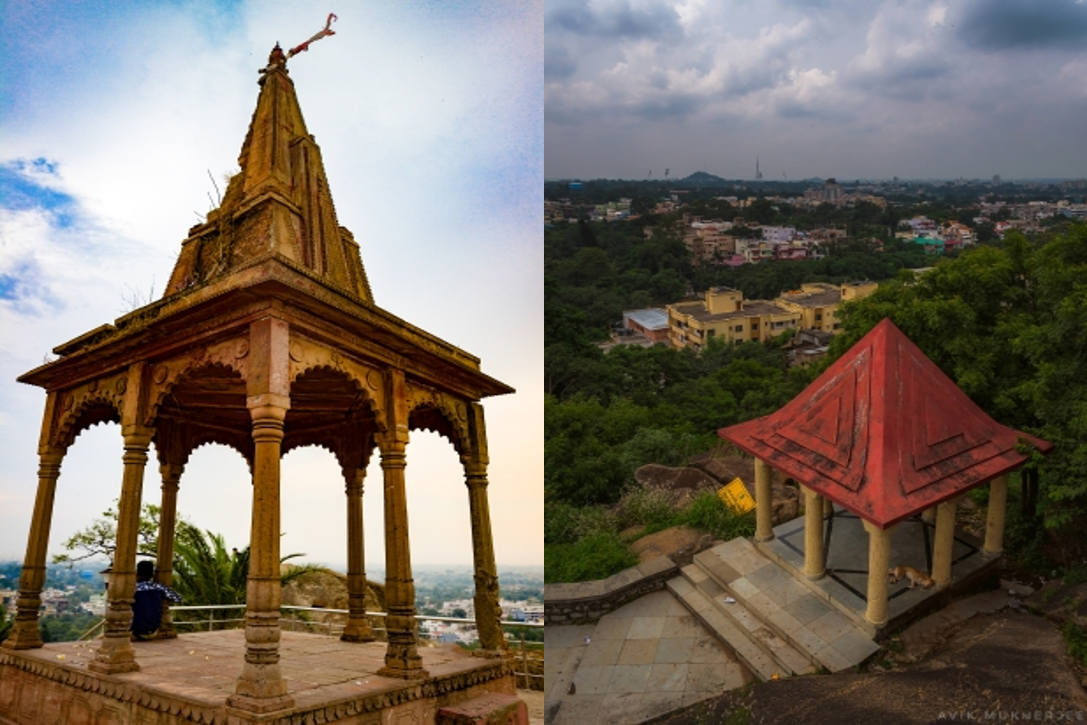
Tagore Hill Ranchi Jharkhand offers a picturesque view of dawn and sunset which can be enjoyed from the pinnacle of Tagore hill. Standing to be one of the most beautiful creations of nature located within the great state of Jharkhand.

The hill is about 300 feet high and is sited 4 kilometers from Albert Ekka Chowk. Tagore hill once stood to be the ashram of Rabindra Nath’s elder brother Jyotindra Nath, before it evolved to be the Tagore Hill we know and love today.

The Ramkrishna Mission Ashram is located at the bottom of the Tagore Hill Ranchi. This ashram is situated in the middle of the Agrarian Vocational Institute and Divyayan. The alluring view of the Tagore Hill of Ranchi captivates the eyes of all its spectators, irrespective of their tastes and interests.

Tagore hill is visited by an astounding number of people to seek to enjoy the calmness, peaceful beauty, and serene atmosphere in the surroundings along with an astounding and pure birds-eye view of Ranchi city which is a beautiful hill station.

Ascend the Tagore hill staircase to reach the hilltop and experience the peace of the fresh and calm environment. Do you easily get tired while walking or climbing? Then rest assured! Tagore Hill has got many places where you can take rest and re-energize.

This destination is equally popular among adventure lovers and thrill seekers pursuing adventure sports and activities like rock climbing. This idyllic hill represents the power of nature that inspired the Nobel laureate, Rabindranath Tagore, to write some of his famed works. Tagore hill to this day carries the proud legacy of the Tagore Family.

Tagore Hill History:
According to the local residents, this hill was once a hideout for hooligans and represented the degrading law in the country. The peace and beauty could only be restored by the combined efforts of the locals and the tourism department.
Tagore-Hills-Ranchi-Jharkhand

The Tagore Hill is strongly associated with Rabindranath’s elder brother Jyotirindranath Tagore who settled here in 1912. Jyotindranath had moved away in search of a secluded respite after his young wife had committed suicide. In doing so, he had found some long-needed solace in Ranchi.

Bewitched by the beauty and view this majestic hill could offer, he urged him to settle down there. He moved on to build the two buildings Brahma Sthal and Shanti Dham. He resided in Shanti Dham until his demise in 1925.

Historians believe that the local zamindar Harihar Singh was quite impressed by the accomplishments of the Tagore family that he decided to donate the hillock and its properties to Jyotirindranath.

Apt to its name, Shanti Dham is truly an abode to peace and the serenity of the atmosphere only adds to its charm. This hill, later on, came to be known as Tagore Hill. This hill was further purchased by the Chaudhary family. Upon the request of the Tagore Hill Trust, Madhusudhan Chaudhary had graciously donated this hill to the trust.

Tagore-Hill-Ranchi-Jharkhand

Places to visit:
You will come across a place called Kusumtala while scaling your way up Tagore hill. Kusumtala is the place where Jyotirindranath Tagore used to sit and perform prayers and it is the birthplace of many of his soulful and soothing music.

A Ramakrishna Mission which is the center of a spiritual retreat is also situated at the base of Tagore Hill and improves the hill’s stature as a spiritually enjoyable spot.

Timings and Entry fee:
Timings:
This hill is open for all the visitors on all days of the week from 10:00 AM to 6:00 PM.

Entry Fee:
There is no entry fee. A great opportunity for you to lose yourself in the peace of nature.

Average Visit Duration:
The average visitor spends around 1 to 2 hours enjoying the serenity of Tagore Hill Jharkhand.

Best Time to Visit:
An awesome place to be in the evening! Gates close at sunset, and to enjoy the best views try to arrive at the gate by 4 pm. Plausible weather is essential for an incredible view of Ranchi.

Tagore hill is the best destination for trek lovers. People visit this site throughout the year. However, this hill is out of bounds during heavy downpours. Safety is highly valued!

How to Reach Tagore Hill Ranchi, Jharkhand:

By Train:
Tagore hill is situated in Morabadi and it is 9km away from the Ranchi railway station.

By Air:
The closest airport would be Birsa Munda Airport which is almost 15 kilometers away from Tagore Hill.

By Road:
Tagore hill is around 7 kilometers away from the Khadgarha bus stand.

You can get entry to this vicinity through rickshaws, taxis, and auto-rickshaws, which may be hired from any part of the city.

Tagore hill awaits you with its panoramic vistas and glorious beauty. A perfect destination for the people who want a getaway from the rigidity of the monotonous routine. You might find the inspiration that you might have been looking for. So this is your chance!

Credits:
A photo brings beauty to any set of text. Photography is an art that takes time and patience. We thank Avik Mukherjee, for providing us with some beautiful photos to share. You can also check out Mr. Mukherjee and his photographs on Instagram @avikininsta

Gir National Park: Home of the Asiatic Lion and Wildlife Adventures

Gir National Park situated in Gujarat is also known as Sasan Gir. Gir National Park in Gujarat is famous for its Asiatic lions. It is the only reserve forest in Asia that houses wild lions.

Gir National Park offers a chance to explore lions in their natural habitat. It is an opportunity to connect with the wilderness of the king of the forest! This park has a special program known as the Lion Breeding program.

Under this program, the lions are bred to stabilize their numbers and extensive research regarding their behavior in the wild is performed. That makes our Gir National Park an abode as well as a research center. It provides lions food, shelter and most importantly protection!

Gir National Park Safari Timings:
There are many safari shifts. Beware though, the safari timings may vary with the season.

Morning Shift
6:00 AM to 9:00 AM
6:45 AM to 9:45 AM
8:30 AM to 11:30 AM

Evening Shift
3 PM to 6 PM
4 PM to 7 PM

Therefore, you have three hours to try out your luck in finding the wild Asiatic lions!

Gir National Park Safari Fees:
Gir Safari offers you a chance to witness the ecosystem from a closer perspective. The Jeep safari for Indians costs INR 5300.00 and INR 13800.00 for foreigners. The safari Jeep can accommodate up to 6 adults and one child.

INR 300 is chargeable per head if you choose to avail Jeep Safari.

To traverse only through the Devalia Park Range, you can also avail the bus that costs INR 150. A piece of important advice for our beloved tourists! Booking from the official website saves a lot of money.

Gir National Park history:
The history of Gir national park takes us back to the 20th century. Nawab of the princely state of Junagadh was the first person to offer protection to the lion population. Their extinction was close due to trophy hunting and the famine in 1899 severely impacted the lion population and this realization struck heavily. Lord Curzon issued orders to restore and protect the dwindling numbers and in 1965, this park was erected as a national park.

Today the park has an area of 1412 square kilometers with 1153 square kilometers making up the sanctuary and the remaining area being a fully protected national park.

Flora:
The Gir National Park is home to more than 400 species of plants and trees. It is mainly a deciduous forest with a fusion of dry scrub, evergreen and semi-evergreen tree species too. It is also known as the largest deciduous forest in western India.

Tree species such as Teak, Acacia, Banyan trees, Prosopis, and Jamun can be found in this wildlife park. This park is biologically important too! It is a research area with scientific, medicinal and aesthetic importance as well.

Gir National Park Entry Fees:
Gir national park entry fees ticket for Indian nationals is 75-95 rupees while 100 rupees for Foreigners.

If you would like to capture beautiful moments, an extra charge of 100 rupees has to be expended!

Do you feel lost in the wild? Well, it is ideal and compulsory to hire a guide. It is quite viable as they charge 250 rupees for four hours only.

Fauna:
This Gujarat Park is home to 674 Asiatic Lions and many other beautiful species of wildlife. You can explore the jungles to find Four-horned Antelopes, Deers, Leopards, Crocodiles, Hyenas, Jackals, Blackbucks, Chinkaras, Sambars, Indian Palm Civets, Wild Boars and many other species.

This park boasts of 37 reptile species, 38 mammal species, 300 bird species and a whopping 2000 insect species!

This park is definitely a paradise for bird lovers with some of the bird species like Crested Serpent Eagles, Crested Treeswift and Rock Bush Quail taking flight in the open air.

Best time to visit Gir National Park:
The climate from December to March is quite surreal, which makes wildlife expeditions memorable. So plan your trip in these months. We have important information regarding Gir National Park! It is closed down from 16th June 15th October in lieu of the south-west monsoon.

Places to visit nearby:
If you have got time then Somnath temple definitely should be on your list. As it is a very easy journey from Somnath to Gir national park is quite tourist-friendly, as is Gir national park to Somnath. It is around 46 kilometers from this park and located by a beach. An ideal destination for religious and recreational fulfillment.

Another important tourist spot would be Girnar Forest that comprises ancient Jain Temples. Junagadh Zoo and Jamjir Waterfalls are some of the other destinations that are nearby this wildlife park and sanctuary.

How to reach Gir National Park:
Gir National Park and Wildlife Sanctuary are both located near Talala Gir, Gujarat.

By Air:
The nearest airport to Gir is Located in Keshod which is at a distance of 60 kilometers. Another plausible option would be to land in Diu airport which is 66 kilometers from this park.

By Rail:
The nearest railway station is sited at the port city of Veraval that is nearly 45 kilometers from Gir.

Private taxis or state-owned buses can be availed from these airports and railway stations to reach Gir. The state of the art road infrastructure is definitely going to make the road trip a memorable experience.

Somnath to Gir National Park:
The time to travel from Somnath to Gir national park is approximately an hour, as it is only about 50 kilometers. The best way to cover this is via road.

Gir National park awaits with all its beauty. The species coexisting together and the ecosystem reigning in peace. This is an expedition that would take you away from the hustle and bustle of modern-day civilization into the world of nature.

Credits:
A picture says more about a place than any writer can ever hope to do. Srikakulamads would like to thank Subhadip Choudhury, for providing us with excellent photos to share with you all! You can also check out his Instagram @karthik__b.m/

Somnath Temple Gujarat: The Timeless Abode of Lord Shiva

We all feel depressed and low. We all face troubles that seem too harsh. Uncertainty reigns and we wonder if we will ever recover. That is why we present to you the Somnath temple. A hindu temple with a glorious past full of destruction. We bring this temple’s tale to you to ignite the passion and fervor. This temple has a voice that conveys the message- “What shall fall once will rise again.”

Shree Somnath Jyotirlinga temple in India, is astoundingly believed to be the first of the twelve Jyotirlinga temples of Lord Shiva. It is believed that a person would be relieved from the repetitive cycle of life and death upon visiting all the twelve Jyotirlingas. This famous Indian temple is located at the Veraval Port in Saurashtra, Gujarat. The walls of this temple sing the tales of the power of Lord Shiva and mark the stature of reconstruction.

Temple Architecture:
The temple has constantly evolved. The present temple is built in Chalukya style. The main spire is 15 meters high and hosts an 8.2 meters flag atop the spire. It is reckoned that the temple is fabricated in such a way that no mass of land can be seen between the temple and Antarctica! This temple is seven storied and is 155 feet with one of the tallest Vimana.

History of Shree Somnath Jyotirlinga Temple:
This is one of the most famous temples in India. The temple had a flow of rare flowers from Kashmir and the air was scented with the aroma of the sandalwood.

It is said that the Moon god himself, as a tribute to Lord Shiva, built the original temple in gold. The demon king Ravana rebuilt this temple in silver in Treta Yug. This temple’s origins are not of this yuga (era).

Hindu myths claim that there are four eras. Each era had a momentous person rebuilding this temple. This temple has been razed to the ground and looted brutally. Yet it stands proud and high.

This Hindu temple symbolizes determination and unprecedented glory. It has risen every time it falls down. We present to you the Somnath Temple Jyotirlinga. The temple that has been looted 17 times and yet continues to overflow with wealth and drowned in vast riches.

Mahmud of Ghazni looted this temple in 1026 AD. Diamonds, rubies, pearls and gemstones that you could never dream of were taken away. The temple witnessed its true destruction. This temple was taken care of by 10000 villagers. 1000 priests daily worshiped it and 500 dancers and singers praised Lord Siva.

Many other rulers plundered the great temple of Somnath. The worst attack was under the supervision of the Mughal king, Aurangzeb in the year of 1701. This resulted in a lot of bloodshed, sacrifices and robbery of great wealth.

The temple was turned into nothing more than debris. Was all hope lost? Good things take time, do they not? In 1783, Sadhvi Ahalya devi Holkar resurrected this temple. Sardar Vallabhai Patel proved his determination to Bharat, by reinstalling and rebuilding Somnath so it could return to its former glory.

To this day, Somnath temple represents the sacrifices of the people who stood against the invaders. Although they never had a chance against the force of the invaders, they fought with nobility and determination; and stood back up on their feet each time they fell. Their lives are lost but their bravery, courage, and valor remains in the golden pages of Bharat’s rich history and its people’s pure hearts. Perhaps this is the reason why the temple is known as “The Shrine Eternal.”
Curse of the moon

The local legends speak of the tales that occurred eons ago. Moon was believed to be cursed by his father –in- law, Daksh. Chandra married the 27 stars who were the daughters of Daksh. Upon neglecting his other 26 wives in favor of Rohini, Chandra was cursed to lose his luster and turn invisible. He prayed to Lord Shiva for years to seek relief from the blight. This penance earned him a boon from Lord Shiva and from that time Lord Shiva resides in this temple as “Lord of the Moon.” Mercy is shown to all those who repent and show remorse. There are so many beautiful legends and history held within the walls of this mystical temple. So denizens, do not forget to add Somnath Jyotirlinga temple to your bucket list!

Best time to visit Somnath Temple:
Winter offers a plausible climate for the pilgrims and tourists to witness and bask in the glory of the temple. The months from October to March would be the ideal time to visit this temple. The cool breezes are likely to enliven your experiences. So what are you waiting for?

Somnath Jyotirlinga temple timings:
The Somnath Jyotirlings temple can be visited anytime between 6:00 am to 20:00 pm. The Somnath temple darshan timings are from 6:00 am to 8:00 pm.

The Aarti timings are at 08.00 am, 12.00 pm and 7.00 pm. This is the ideal time to lose yourselves in the melody of devotional chanting.

How to reach Somnath Jyotirlinga Temple?

By train:
The majestic Somnath Jyotirlinga temple is located 7 kilometers from the railway station of Veraval.

By flight:
The nearest airport from Somnath Jyotirlinga temple is at a distance of 95 kilometers, located in Diu. From these places, public buses can be availed or any private cabs or taxis can help you out in reaching this destination.

If you are looking for inspiration in life, this is the place. If you want to connect with the heritage and history of our country, Somnath temple is the destination for you. A fusion of devotion, spiritualism and patriotism truly make this one of the best places to visit in India!

Credits:
A picture says more about a place than any writer can ever hope to do. Srikakulamads would like to thank Subhadip Choudhury, for providing us with excellent photos to share with you all! You can also check out his Instagram @explore_with_nayak/ and srkfloating_heart/

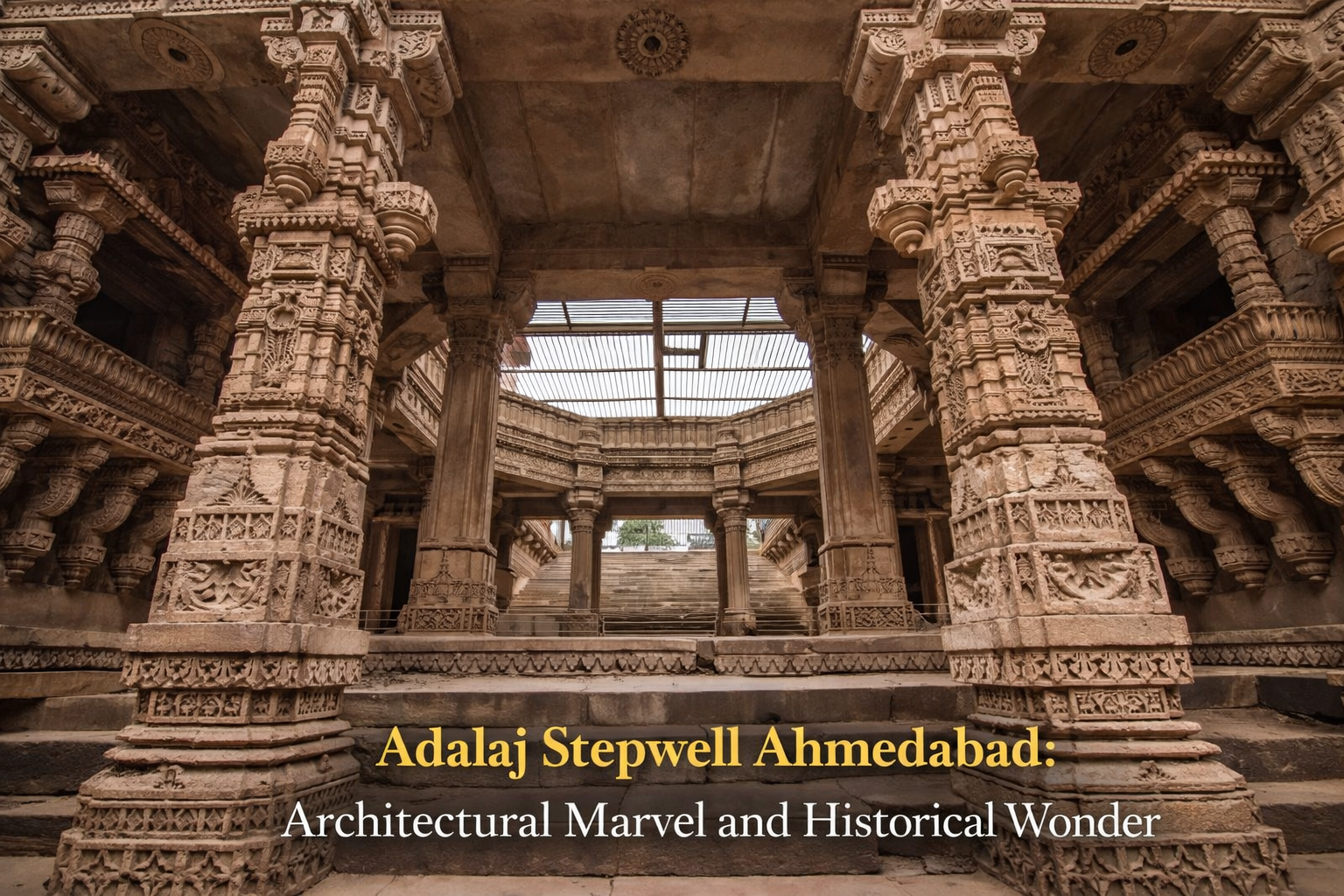
Adalaj Stepwell Ahmedabad: Architectural Marvel and Historical Wonder

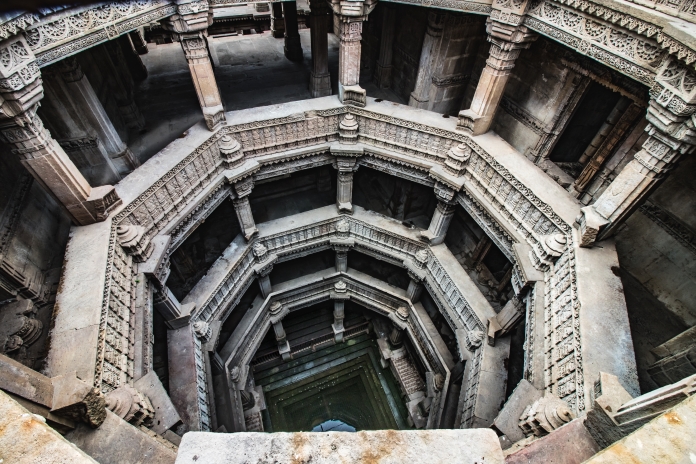
Adalaj Stepwell is also known as Rudabai Stepwell. The grandeur of the architecture depicts the Indo-Islamic architectural elements and the structure beholds a tale of beauty and tragedy. Adalaj ni vav is a five-story structure adorned with graceful sculptures from both Hindu and Jain religions.

Adalaj Stepwell Timing and Entry Fee:
Stepwell of Adalaj is open to tourists on all days from morning 6 am to evening 6 pm.
This majestic destination has no entry fees! The Adalaj Stepwell is a beautiful architectural destination that stands proudly and welcomes all tourists warmly!

Adalaj Stepwell Architecture:
Can beauty be captured in stones? The answer is definitely yes! Adalaj ni vav is the perfect depiction. The visual vista offered from the fifth floor is alluring. The turquoise waters glowing under the shade of the golden sun is a sight to behold. This structure is a fusion of Hindu craftsmanship and Geometric patterns of Islamic architecture. The carvings represent the daily life of people from women churning butter to a king sitting on a stool with two chauri bearers. This place is also considered to be holy and many people offer flowers to the Hindu and Jain deities adorning the walls. The entire structure comprises finely carved columns and skillfully crafted platforms and niches.

The opening in the ceiling enables light and air to enter the octagonal well. However, there is one fascinating feature! No direct sunlight touches the flight of stairs and that is how the Stepwell is cooler than the outside ambiance.

This stepwell has three entrance stairs. The designs also feature Navagraha that are believed to ward off evil spirits, a pot called Ami Khumbor that beholds water of life and Kalpavriksha- the tree of life.

The step well is dug deep enough to store rainwater and prevent the shortage of water. This shows that there is always a solution to the challenges of life!

Adalaj Stepwell History:
By now, you would have learned about the exquisite architecture here at the stepwell of Adalaj. There is more to this structure. These walls sing a tale of love and war. This stepwell brings to you a story about devotion, betrayal, and sacrifice.

Adalaj-Stepwell-History

King Rana Veer Singh commenced the construction of this stepwell to battle the water scarcity in 1499. It was to relieve the people in the arid regions from the pain of walking miles and miles. Unfortunately, he never lived to see the glory of this stepwell. He was martyred in the battle against the Sultan of Gujarat, Mehmud Begada.

Mehmud Begada fell in love with Rana Veer Singh’s widow Queen Rudabai. The queen agreed to marry him provided he first completed the construction of the stepwell. Remember those were the days that depict our country’s loyalty and devotion. The queen only wanted her late husband’s dreams to come true. Once the stepwell was constructed, Queen Rudabai fell into the stepwell and died.

The tombs of the six masons who constructed this stepwell can be seen too! Mehmud Begada did not want anyone to replicate the allure of the Adalaj Stepwell. Then upon his orders, the six masons who had built the step well of Adalaj were killed.

The Adalaj Sanctuary:
The Adalaj step well provided refuge to travelers and local people. The architectural design ensures that the insides of Adalaj Stepwell are 6 degrees cooler than the outside atmosphere. The villagers used to come to this stepwell in the early mornings to fill waters and offer prayers to the deities carved into the walls.

Adalaj-Stepwell-in-Ahmedabad

The Adalaj stepwell has served as a resting place for pilgrims and caravans too! All these services and shelter are free of cost. The benevolence of the king, the brilliance of the Queen Rudabai, and the love of Mehmud Begada brought this architectural wonder into existence. This stepwell was a haven that quenched the thirst of the people.

How to reach:
The Adalaj Stepwell is located in Adalaj village, Gandhinagar district, Gujarat.

By Air:
Sardar Vallabhai Patel International Airport is the nearest airport from Adalaj Stepwell that is 15 kilometers away.

By Train:
Ahmedabad Railway Station is the nearest train station located at a distance of
18 kilometers from this Stepwell.

By Road:
Adalaj Stepwell is sited at a distance of 18 kilometers from the city of Ahmedabad and 128 kilometers from Vadodara. Any private cab or bus can be availed to reach Adalaj.

The Adalaj Stepwell symbolizes a tragic yet beautiful love story. There is a message for all of us. There is a depiction of something more than architecture. Helping people is the true heritage of our Bharat. Adalaj Stepwell awaits to bewitch you with its intricate architecture and rich history.

Credits:
Ajith PV provided the Peacock island images used in this Srikakulamads article. We thank him for these fantastic shots! The second peacock island image was produced as a result of his talent. You can check out his Instagram @_alwaysajith/

Basilica of Bom Jesus Goa: UNESCO Heritage and Christian Legacy

Basilica of Bom Jesus (Good or infant Jesus) is a Roman Catholic church located in old Goa(Former capital of Portuguese India), Goa. The Basilica of Bom Jesus church is famous for its baroque and Portuguese colonial-style architecture.

THIS JESUIT CHURCH IS THE FIRST MINOR BASILICA OF INDIA. IT IS ALSO REGARDED AS ONE OF THE SEVEN WONDERS OF PORTUGUESE ORIGIN IN THE WORLD.

The Basilica of Bom Jesus also preserves the mortal remains of St. Francis Xavier.

Basilica of Bom Jesus History:
St. Francis Xavier has been buried in the church. He died on Sancian island or Shangchuan island when he was going to China. His body was taken to Portuguese Malacca but after two years in 1662, it was brought to Goa. It is said that the saint’s body was still fresh when it was brought to Goa.

People also believe that the body of a saint contains miraculous healing powers. Its construction was initiated in the year 1594 and continued on till the year 1605. After completion of the basilica in 1605 then archbishop Alexio De Menzes declared it sacred.
Architecture

Both the interiors and exteriors of the church are adorned with architectural and decorative details. The church floor is built with a pure marble base adorned by semi-precious stones.
The church’s Altar is adorned lavishly and is covered with gold. The church’s interior is strikingly charming yet simple with its Corinthian mosaic architectural build style.

The lavish use of ornamentation with a stucco or plaster marble finish gives the church a fine touch. The Basilica of Bom Jesus in Goa is a stunning place to add to your bucket list along with fine sandy beaches that you will likely visit on your trip to Goa.


Things to see during your visit:
Mausoleum of Saint Francis Xavier
It is a mausoleum of Saint Francis Xavier in the church. A silver casket is on the top mausoleum in which the body of Saint Francis Xavier is kept. Giovanni Battista Foggini was the designer and architect of the mausoleum. It took ten years to complete it. It is constructed on the base of jasper which is red and purple colored and has been adorned with marble.

The Bom Jesus Basilica Art Gallery:
Bom Jesus Basilica art gallery is one of the largest art galleries in Asia consisting of around 36 paintings. It is constructed in front of a tomb and contains books written by Dom Martin who was a painter in Goa.

Professed House:
It is a two-story building and has lime plaster on the outer walls. Jesuits built the house in the 16th century whose façade was built by black granite. The construction of the house began in 1585 and completed in 1589. The house and the church are linked through a colonnaded arcade.

Chapel:
There is a chapel with twisted columns and floral decorations. The remains of Saint Francis Xavier are kept here. People can see the paintings and carvings in the interior of the chapel which tells about the life of Saint.

Public view sessions:
There is a public view session held in church every ten years where people from around the globe gather to see the vestiges of the saint. It was last held in 2014 and the next session will be in 2024.

Feast of St. Francis Xavier:
Every year on the 3rd of December, the feast of Saint Xavier is celebrated. On this day many pilgrims come to visit the church. A pilgrimage is made to the church nine days before or on the day of the feast is a must. Non-Christians also come to visit the church during this period of time.

Basilica of Bom Jesus Timings:
9:00 am – 6:30 pm on weekdays and 10:00 am – 6:30 pm on Sunday.

Entry fee:
The great Basilica of Bom Jesus Goa has no entry fee.

Best Time to Visit:
The best time to visit the Basilica Of Bom Jesus is during winter from November to March when the weather is mild and pleasant. If you don’t want to be overcrowded then you may not visit the church on Sunday.


How to reach Basilica of Bom Jesus Goa:

By Rail:
Old Goad does not have its own railway station but the nearest are Thivim, Madgaon, and Vasco da Gama. Madgaon is 28 km away from Goa while Vasco da Gama is 46 km away. The distance between Thivim and Goa is 60km. All the stations and especially Madgaon is well-connected to many parts of India.

By Air:
The airport nearest to Goa is located in Dabolim which lies 29 kilometers away from Goa. It is called the Goa International Airport or the Dabolim Airport. There are domestic flights connecting Goa to Mumbai, Bangalore, Chennai, Hyderabad, Delhi, and Kolkata. There are also international flights available that connect the city of Goa to the Gulf and Arab countries including Oman.

By Road:
Through road transport. Tourists can catch buses from Pune, Belgaum, Kolhapur, Mangalore, etc. and reach the Kadamba bus stand at Panjim. Tourists can also book taxis and come to Goa.

Credits:
A picture says more about a place than any writer can ever hope to do. Srikakulamads would like to thank Subhadip Choudhury, for providing us with excellent photos to share with you all! You can also check out his Instagram @laiibharii

Leh Palace Ladakh: A Majestic Blend of History and Himalayan Beauty

The historical and royal Leh palace is located in the city of Leh, Ladakh situated in the Indian Himalayas. It is a former royal palace that overlooks the town of Leh. Present in the beautiful Indian state of Jammu & Kashmir. Leh Palace is also known as “Lachen Palkhar”. If palaces could have a soul, Leh palace’s soul would be rich in its heritage and history.

Leh palace has seen inevitable changes in Leh’s resurrection from the days of it being a cut-off region near Tibet to eventually becoming one of the highly famed tourist places around the globe. This palace is now in a tumbledown condition and is being maintained by the “Archaeological Survey of India (ASI)”.

This majestic building also holds a museum that is over 450 years old. Overall one can say that this location provides a breathtaking and picturesque view of the snow-clad mountains of Ladakh. Leh Palace is among one of the greatest and most historic of all the Leh tourist places in Ladakh.

Leh Palace History:
While the written records date the existence of Leh Palace Ladakh all the way back to the 16th century, there are many historical facts that were left unwritten. The construction of this Leh palace started in 1553 by Emperor Tsewang Namgyal, founder of the Namgyal Dynasty of Ladakh. The nine-storied building was finally completed in the 17th century by the nephew of Tsewang Namgyal, Sengge Namgyal. He is also known by the name of “Lion King”.

The darkest time in the history of the palace was when the whole Royal Family had to desert this palace and shift to another stock palace in the mid 19th century as the Dogra Dynasty forces invaded Ladakh and overtook the control of the whole city. The palace’s soul has also faced some of the most devastating wars. This is evident from the damage caused by cannonballs.

Architecture:
Leh Royal Palace is one of the marvels of architecture around the world. It is a nine-story building, built mostly out of the soil, rocks, and wood, and also capable of withstanding intense seismic shocks over the city. Designed in line with the Potala Palace in Lhasa Palace, Tibet, the Leh Palace is one of the tallest buildings of that era. The jutted out wooden balconies and the huge walls are the unique features of the medieval Tibetan architectural style.

The entrance of the palace is decorated with wood-carved figurines. Although the palace is located in ruins, some small rooms, few spacious compartments, and corridors still exist. The bigger rooms and corridors of the palace have been transformed into exhibition halls. Back in the 16th century, it was an arduous task to carry all of the construction material to the top of this steep and craggy hill. After discerning this monument we can imagine the amount of hard work that has been done by the workers. The animals involved in the construction task had also done a commendable job.

A “Victory Tower” stands above the great royal palace Leh Ladakh. This tower was erected to pay tribute to the dauntless Ladakhi Soldiers who fought valiantly against the invading Balti Kashmiri Soldiers in the 16th century. This royal palace witnessed the victory of the Ladakhi Brave hearts.

Timings and Entry fee:
Due to its historic nature and astounding construction, the Government of India, in a step to preserve this monument and its historic culture and heritage, has set up an office of the Archaeological Conservation Organisation. According to this organization, this monumental Leh Palace is open for the folks between 7:00 AM to 4:00 PM.

The entry charges for the Leh city Palace are very minimal. Indian Citizens are charged Rs. 15/- per head and a foreign national is charged Rs. 100/-.

Best Time to Visit:
Although Leh palace is open for visitors around the year, this majestic royal palace will be more enchanting if one decides to visit this palace during summers from April to August. The weather remains pleasant and the sun rays beautifully scatter over the monument illuminating the palace, making it an “abode of heaven”.

How to Reach Leh Palace:

By Rail:
The nearest railway junctions from Leh Palace are Chandigarh Junction and Pathankot Junction. But opting for railways is not a convenient option as it would take 2-3 days to reach the city of Leh by road from these stations.

By Air:
Srinagar, Jammu, and Delhi are the nearest Airports from Leh. After landing in one of these cities, you would have to carry out your further journey by roadways.

By Road:
One can take their own personal vehicles to reach this city. Moreover, regular bus services are organized by the J&K State Road Transport Corporation, plying from Srinagar to Leh. Private taxis are also available for rent. Himachal Pradesh Tourism (HRTC) also operates ordinary and deluxe buses from Manali to Leh on a daily basis.

Adventure lovers from across the globe often go for self-driving and hire jeep, SUV, motorbike, or even a cycle to reach Leh via various available challenging routes.

Credits:
Ujjaval Vaidya provided the Peacock island images used in this Srikakulamads article. We thank him for these fantastic shots! The second peacock island image was produced as a result of his talent. You can check out his Instagram @ujjaval_vaidya/